You know this feeling. The thermostat says 23. The gas bill says 250 euros. But your feet are freezing, your nose is dry, and there is a black corner behind the wardrobe that keeps coming back no matter how many times you paint it.
You are not crazy. Your thermostat is lying to you. It measures only air at 1.5 meters height next to a warm wall. It does not measure what your body actually feels: cold walls stealing your heat.
Table of Contents:
Hot Air Is A Thief
Your radiator heats air to 55 degrees. Hot air is light, so it immediately flies to the ceiling. At the ceiling you have 27 degrees. At the floor where your children play you have 16 degrees. That hot air finds a crack, leaves through the roof, and is gone forever. You open a window for 5 minutes and you have to reheat the whole house for an hour.
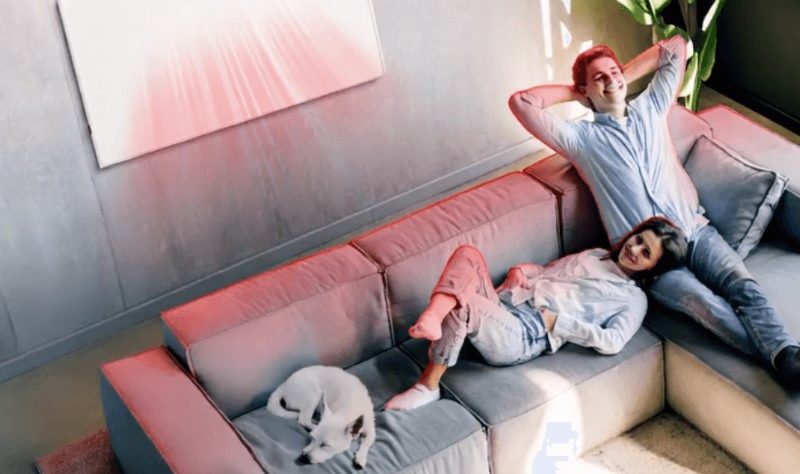
An infrared panel never heats air. It is invisible light, like sunshine. It crosses the air without losing energy and turns into warmth only when it touches a solid surface – your skin, your floor, your walls, your bed.
In 15 minutes the floor is 23 degrees warm to bare feet. In 30 minutes all four walls are 22 degrees warm. Now your walls become the heater. They radiate soft warmth back to you from all sides like a warm stone oven. The air stays calm, humid at 50%, no dust flying. You feel warm at 20 degrees air temperature, because you are surrounded by warm surfaces, not hot air.
The Real Reason For Mold
They told you mold comes from not ventilating. They sold you chemical paint. Mold came back.
Mold does not need humid air. It needs a wet wall. And walls get wet because they are cold.
When you shower, you create warm humid air at 24 degrees. That air touches the outside wall behind the bed that is only 14 degrees. The air cools down and drops all its water on that wall, like a cold bottle sweating in summer. The wall is wet 24 hours a day. Mold lives on that water.
You cannot fix this by heating air more. More hot air means more water that will condense on the cold wall.
You fix it by making the wall warmer than the air. A ceiling infrared panel shines on that wall and keeps it at 21 degrees. Now 24-degree air touches a 21-degree wall and nothing happens. No water, no mold. In hundreds of houses we fixed, mold dried out and fell off by itself in 3 weeks. No bleach. Just physics.
A Weekend House That Is Warm When You Arrive
If you have a house at the coast or in the mountains, you know the Friday night shock. House at 6 degrees, walls ice cold, you sit in a jacket for 3 hours while radiators try.
With infrared there is no water in the system. No pipes, no boiler, nothing to freeze or burst. You can leave the house at minus 15 degrees for 3 months completely off.
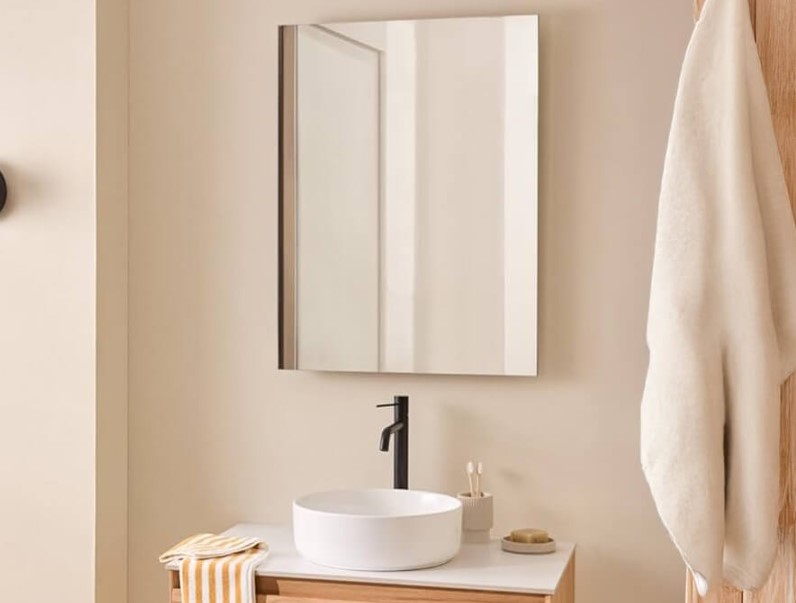
One hour before you leave home, you open your phone. You tap Living Room 21 degrees, Bathroom 24 degrees. When you open the door, the floor is lukewarm, the towels are warm, the mirror never fogs. If you forgot to switch off on Sunday, you do it from the highway.
One 700W panel per 14 sqm room, 2 cm thin, 7 kilos, 4 screws, one plug. Each room has its own WiFi thermostat with weekly program. The panel pulses 20 minutes on, 40 minutes off, because warm walls keep giving heat when it is off. Consumption per room: about 2 kWh per day, 0.50 EUR per day.
No service, no gas fixed fees, no chimney, no noise, 25 years warranty. And if you have solar panels, your sun becomes your heat almost for free.
Stop heating air you throw away. Start heating walls that hug you.